
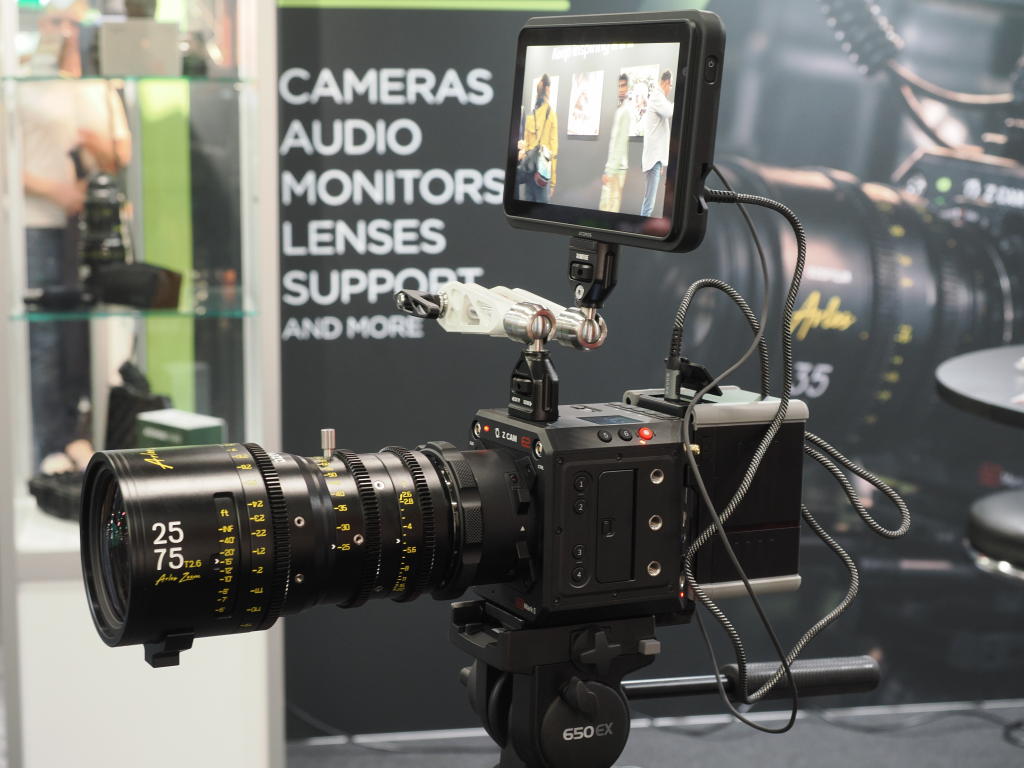
I’d already done a PATLive on the first evening of Imaging World and talked about what was going on. On Saturday, I went back there and had a look around the stands I’d missed before. One of them was ‘Z-Cam’ – a micro four thirds video camera. Z-Cam are a Chinese company based in – naturally – Shenzhen, and their Regensburg-based distributor, Riwit, was at the fair. The Z-Cam M4 Mark II has an FT- sensor and delivers C4K at 120 fps and Full HD at 240 fps. With 10-bit colour. Every conceivable – and inconceivable – connection. Plus an open API and an SDK. Metal body. Although the sensor only has 10.71 megapixels, it offers a dynamic range of up to 16 stops. ISO ranges from 500 to 102,400. And it even has autofocus. It’s available for around 2,000 euros.
The distributor has a few other items in stock. For example, an electric handcart.
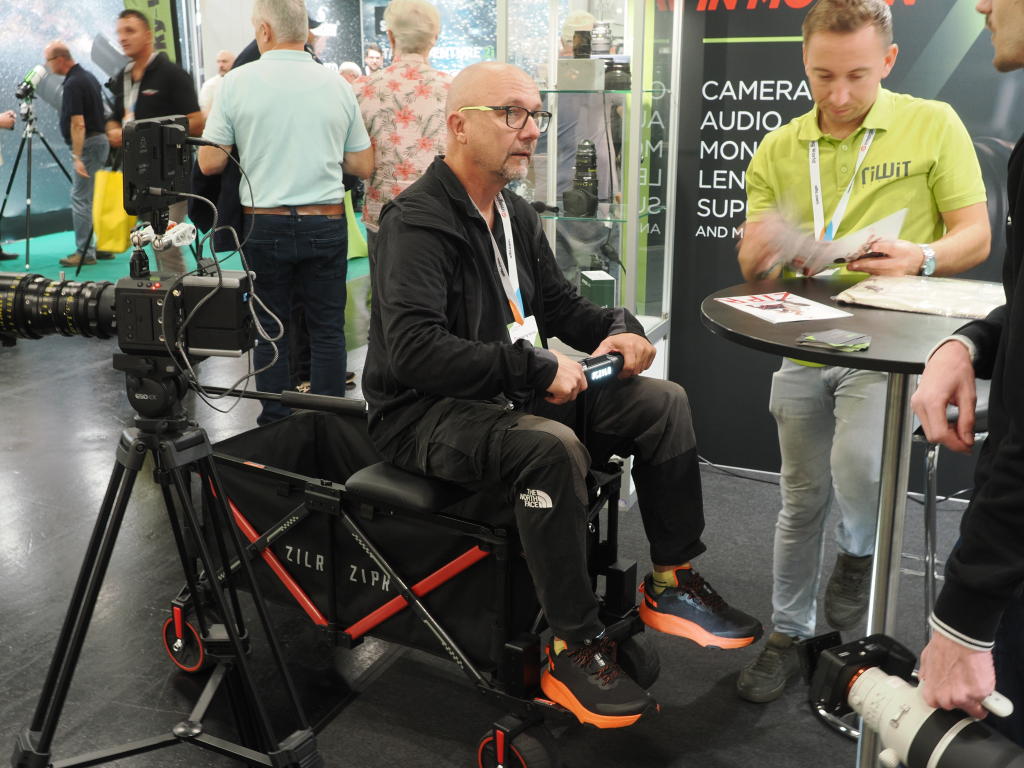
The ZILR ZIPR costs 1,499 with two-wheel drive and just under 2,000 euros with 4WD. You could hire this speed demon at the trade fair and race through the aisles in it. It could seat two people and, as far as I could see, everyone – apart from this guy – had a massive grin on their face. 300 kilos payload, up to 30 km range. Top speed of 16 km/h.
Admittedly a bit overambitious as a trade fair vehicle, but anyone who’s ever set up on location and had to walk half a kilometre from the car park to the stand will be amazed. So if you regularly have to haul things around and get paid for it – do have a look at this. You can also use it as a simple handcart, except that you don’t have to drag it – it drives itself. And as a 4WD, it can handle rough terrain too. (“Sorry, the car park isn’t finished yet; we hope you don’t mind the puddles and the gravel.”) Or when birdwatchers want to head into the woods with a camouflage tent, provisions, four large lenses and tripods… OK. You could do that with a normal handcart too – but this thing here is worlds cooler.
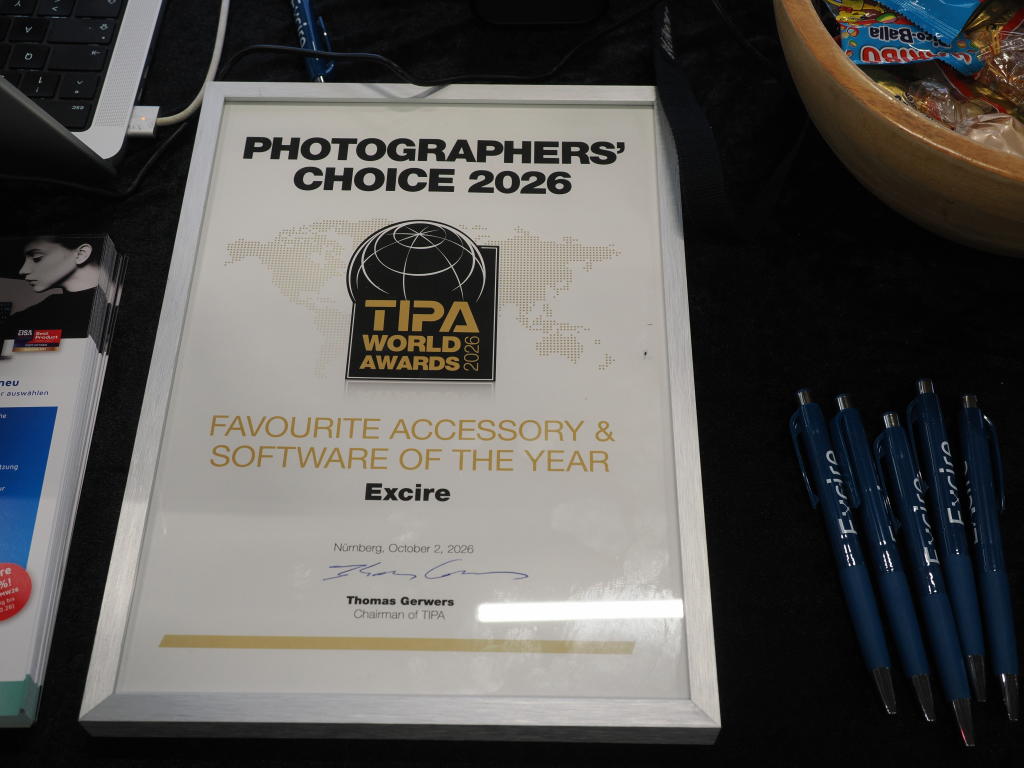
Then I visited the Excire stand. There, I had a long chat with Mr Martinez, the managing director of Pattern Recognition Company GmbH from Lübeck, the company that programmed Excire. They were in high spirits because they’d won the TIPA World Award for their software the evening before.
I’ve cleared up a few misunderstandings with him that had arisen back then. At the time, they thought I expected them to promote my book and were therefore a bit offended. Which, in turn, had surprised me, because I hadn’t expected that at all. In any case, that’s all sorted out now, and when I get round to it, there’ll be a book about the new version.
I’ve explained at length that I’ve switched from Excire to Digikam – and that’s still the case, but every couple of weeks or so I fire up Excire again to see if the plain-text search helps me out. With my million images, Excire is naturally overwhelmed – the number of images found regularly runs into the thousands – but if you’ve got around a hundred thousand images, Excire really does help deliver fast, reasonably accurate search results. And I always have to bear in mind that not everyone has the same requirements as me.
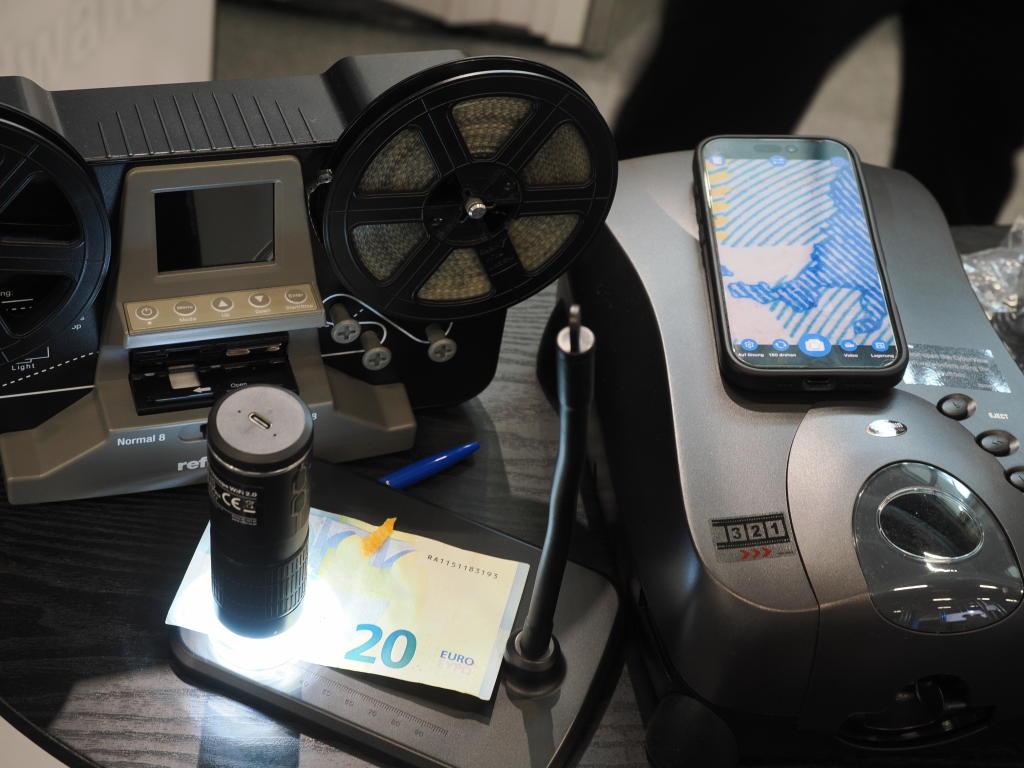
I saw this on the Reflecta booth. A magnifying glass with a light that streams directly to your mobile. You can see Campania, Calabria and Basilicata. And a bit of Apulia. It’s called the DigiMicroscope WiFi 2.0 and costs just under 60 euros. It also comes with a gooseneck stand. “Is that new?” “Nah, it’s been around for two years.” And if you don’t want to use it with your mobile, you can simply plug it into your computer via USB.
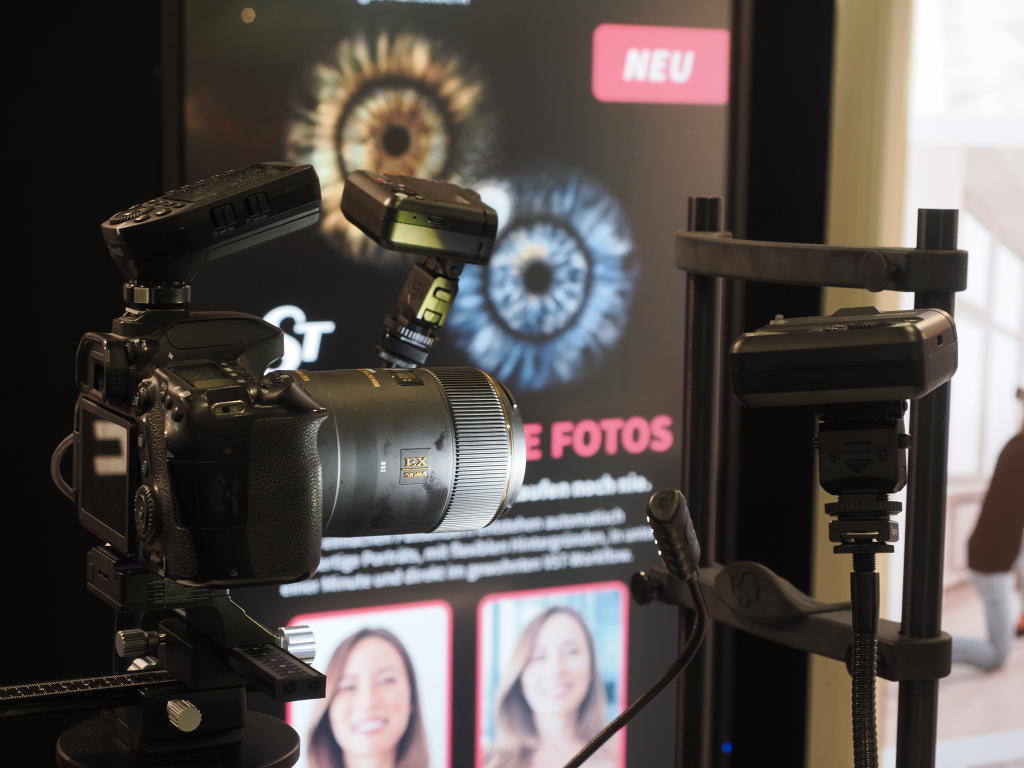
As a consumer, you can’t actually buy anything here – what you get is a method for iris photography. This was a huge relief to me, because I once wasted a whole day trying to take a photo of an iris and always ended up with a glare from the lamp in the picture. I managed to eliminate it to a large extent, but I couldn’t get rid of it completely. Now they’ve explained to me that this is completely normal; the glare is removed using AI and then the image is processed to correct the sharpness and contrast. All I can say is: thanks for the chat. Another lesson learnt.
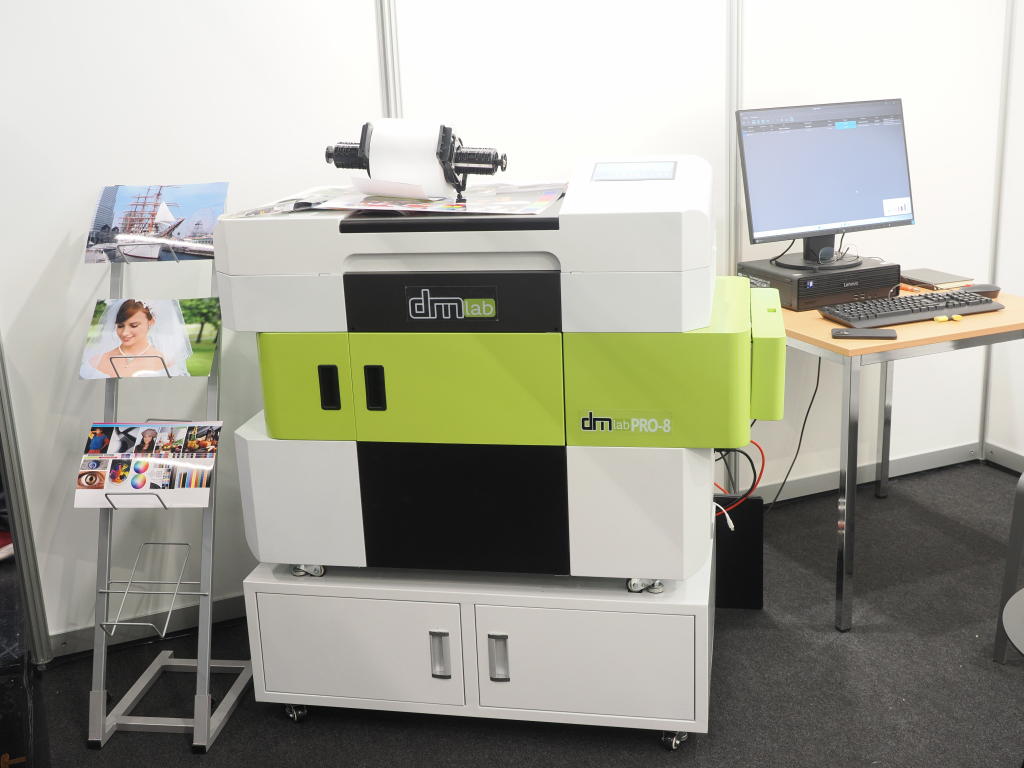
In my search for booths where nothing much was going on, I eventually ended up here: an inkjet lab. A ‘must-have’ for photographers who want to provide their clients with high-quality photos straight away. The stand was supplied by PM2s, who actually repair Fuji Frontier Labs. I couldn’t find anything about the machine online – perhaps one of the readers knows what it’s all about. As I don’t need a lab myself, I didn’t make a point of finding out where I could get hold of it or how much it costs.
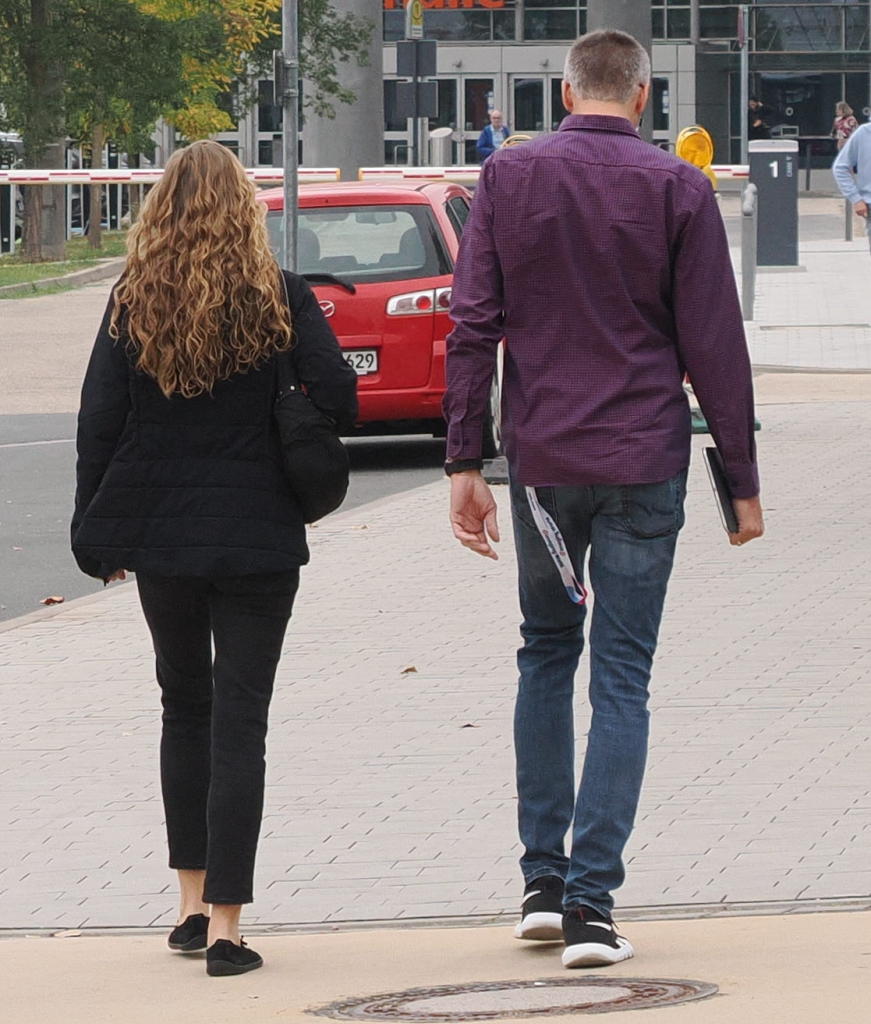
After the press conference – which I’ve already reported on here – I set off again. And who should I bump into? Michael Leidel, aka AmazingNature Alpha. I’d nearly knocked Wiesner over the day before, and now Mr Leidel. It seems the cream of the crop had gathered in Nuremberg.
That’s all for now.
Ja, Michael Leidl hat am Samstagabend einen interessanten Vortrag bei der Jubiläums -Mitgliederveranstaltung der Fotocommunity gehalten. Ich hätte ihn gerne was gefragt… aber er war gleich wieder verschwunden…. oder ich habe ihn in der Menge der Mitglieder nicht entdecken können….
Apropos „Bollerwagen“ mit Allrad. Die bessere Alterrnative sind doch ein paar hübsche Scherpinen.
Damit ist man auch ein „who is who“…